Home Page | Blog | Managing | Marketing | Planning | Strategy | Sales | Service | Networking | Voice Marketing Inc.

Strategy: Every Business Needs One
Use a Planning Process to Write Strategic Plan
Every business needs a strategy. Understanding the definition of strategic planning will provide the basis upon which you can write your strategic plan. You need to engage in the strategic planning process to lead your business in the direction you want to go.
Search This Site

To develop a strategic plan for your small business, you need to consider many internal and external factors; you also need to consider the definition business model for your business, within your industry and amongst your competition.
The very first piece of advice I usually give new business startups is:
Write Strategic Plan!
Why?
Because, at least, it focuses you, as the new business owner, on the strategic planning process.
And, at best, it helps small business owners to develop a sustainable business model through the development of great strategies (and it helps to define the business model you want for your business) that align with your vision and goals.
A strategy plan is more, and different, than building a business plan.
What is the Definition of Strategic Planning?
Understanding the definition of strategic planning will help you to write an effective plan that's focused on your goals and objectives.
Planning helps you decide where your business is heading, how it will get where it's heading, when you've got there and what the success measures are; a strategic plan encompasses the entire business and organization and provides strategies for implementation and results.
Building Your Strategy
For example, you need to understand:
What types of markets do you need, and want, to target?
How to successfully grow your market (using some pretty specific market opportunities tactics)?
What types of customers to target?
What your geographical reach or area is; or should be?
What types (or features and benefits) of services or products (consider your marketing mix product tactics in your decision making process) to offer?
Is it time to consider the advantages of diversification; (understanding the differences between unrelated and related diversification) from a market, industry, global, product, and/or services perspective?
Is it time to assess your product tactics?
What are your company's strengths and weaknesses (internal)?
What are your company's opportunities and threats (external)? Follow a sample SWOT analysis to develop your own SWOT and to answer both the internal and external questions.
Does your company have enough cash flow or will you need access to credit? Are your personal and business credit reports in order? Managing your cash and your credit is a key element of building your strategy.
Who are your competitors (do some competitive intelligence analysis)? And what is your competitive strategy?
What are your industry's key success factors (do an industry analysis)?
How does your business compare to your competition in a value chain analysis?
What type of skills, equipment and technology are required in your industry (build a strong business operations plan)?
And then ask yourself if your small business model (using a 5 Forces Model) should focus on a niche, a low cost provider, high cost and high service, or a diversified strategic approach?
When you've answered those basic questions, and other more specific questions related to your own business and your industry, then you can begin to map out the results or answers to build, and to write, strategic plan.
Use a Checklist Approach to simplify the process: my best, most focused and successful strategic plans come out of using a customized plan checklist.
Develop your own checklist that best fits your business or adapt the strategic plan checklist that you can find on this website.
Strategy
Use a detailed strategic plan checklist to build a thorough strategic plan.
A checklist approach helps you to focus on what needs to be done.
It's in the details; with a checklist you won't miss any of the elements you need for business techniques, tactics, actions and plans.
If you need to make choices (related to time and/or resources), then focus on strategies that move the plan forward.
Many business owners feel that they don't have the time to build their small business strategy.
However, if you do not define your strategy in business then you are at a significant disadvantage in the marketplace.
Managing

Managing your business requires careful planning.
Additionally, you need to measure your business performance.
Use action item examples to design your specific actions; and to develop a continuous improvement foundation for your business.
You also need to understand the power and advantages of diversification as an effective business growth structure.
And by analyzing examples of tactics that work for growing your business (including related diversification, horizontal or vertical mergers, and acquisitions), you can manage your business direction effectively.
The Plan
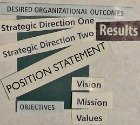
There is a difference between building a small business plan and building a strategic plan.
However, building strategy requires extra time and effort; typically not all business owners can invest that (consider outsourcing the process if time is an issue).
So, at a minimum, build a simple business plan, that includes mission and vision statements, a value statement, business code ethics and other cultural and structural framework for your organization.
Understand your business model definition and use a sample SWOT analysis to assess your organization's strengths, weaknesses, opportunities and threats and build strategies to capitalize, and/or manage, them.
Industry

Before you can build effective strategies, you need to understand your competition in business (by conducting a thorough competitive intelligence review).
Talk to your local trade or industry association; they can provide you with in-depth industry analysis, statistics and research that will help you build your business.
Then use that industry information, and other data that you've collected from the contacts you've made within the industry or from government sources, to build your competitive strategy.
Marketing

To build strategic advantages, you need to construct a comprehensive small business marketing plan; one that includes market segmentation and target marketing.
Your plan also needs to include a value chain analysis and market strategies that are built specifically for your business challenges and opportunities.
Have a clear understanding of the direction that you want to go (build your vision statement) to ensure that your efforts are highly focused.
Operations

Your business operations need a strong foundation.
And the foundation has to be built on a strong service and/or product strategy; which is most often developed along with your service and/or product development program and your product marketing mix.
Find best practices from others in your industry and develop standard operating procedures as one of the first steps in building the operation's strategies.
Consider lean principles that streamline your operating environment.
Write Strategic Plan
A good strategic plan is typically a very focused document that addresses the organization's longer term vision (known as a vision statement) and direction - the road map; and a good small business plan to address how to get there (often detailed in shorter terms, year by year).
Strategic plans, business plans, business models and business cases, marketing plans, are not interchangeable - they are all different but related. The focus for strategic planning is on developing the strategies necessary to move forward.
I believe in strategic planning. When you invest the time (and thinking) in planning your strategy, you understand your business better.
Recognize that at some point in your business' future, you will need to do a comprehensive strategic planning exercise - it's important for your success and growth.
Building a clear and direct business road map is necessary to building a strong performing business; whether that business is small, medium or large.
Planning this road map requires asking and answering questions that will determine the direction of the business and that will build decisions into directions to lead you where you want to go.
Focus on reaching your strategic direction: establish goals and objectives and also ensure that you have an action plan that gets you where you want to go, effectively.
More-For-Small-Business Newsletter:
For more timely and regular monthly information on managing your
small business,
please subscribe here.
Return to More for Small Business Home Page.
Subscribe to
More Business Resources E-zine
The Importance of Strategy
Why is strategizing important to your business?
Because it enables you to more clearly understand what you need to do to more your operation in the direction you need, and want, to go.
Doing a thorough analysis and review will enable you to implement more effective strategies, tactics and techniques.
Results and Strategy

Definition of Business Model: It's Different
The type of tactical planning you complete as you strategize is important because it forces you to make difficult choices and difficult decisions.
(Make sure you understand the definition business model - the practices, and focus, of the business on delivering the value proposition - to engage in a strong and successful strategic planning process).
Also write down your choices and decisions to plan the actions necessary to move forward (use samples to provide you with a model for your own action plan).
The action plan is your road map. You must ensure that you are managing the direction you take.
Once you begin this planning process you will need to ensure that the plan you develop is do-able; make sure you include effectiveness measures in your plan.
And remember that your plan for strategy in business needs to be reviewed on a regular basis and be adapted as market and economic conditions change.
The end goal is not the plan but rather the results therefore make sure you have measurements in place to track results.
This Site


Tools for Strategy Planning
Start with your SWOT (strengths, weaknesses, opportunities and threats) analysis.
Add aspirations and results to the SWOT (some do SOAR (strengths, opportunities, aspirations, and results) as a separate activity) to ensure that your vision for your business is incorporated in your goals and objectives.
Conduct a market opportunity analysis and look for unmet needs that align with your objectives.
Doing a thorough analysis and review will enable you to implement more effective strategies, tactics and techniques.



 Contact